Key Takeaways
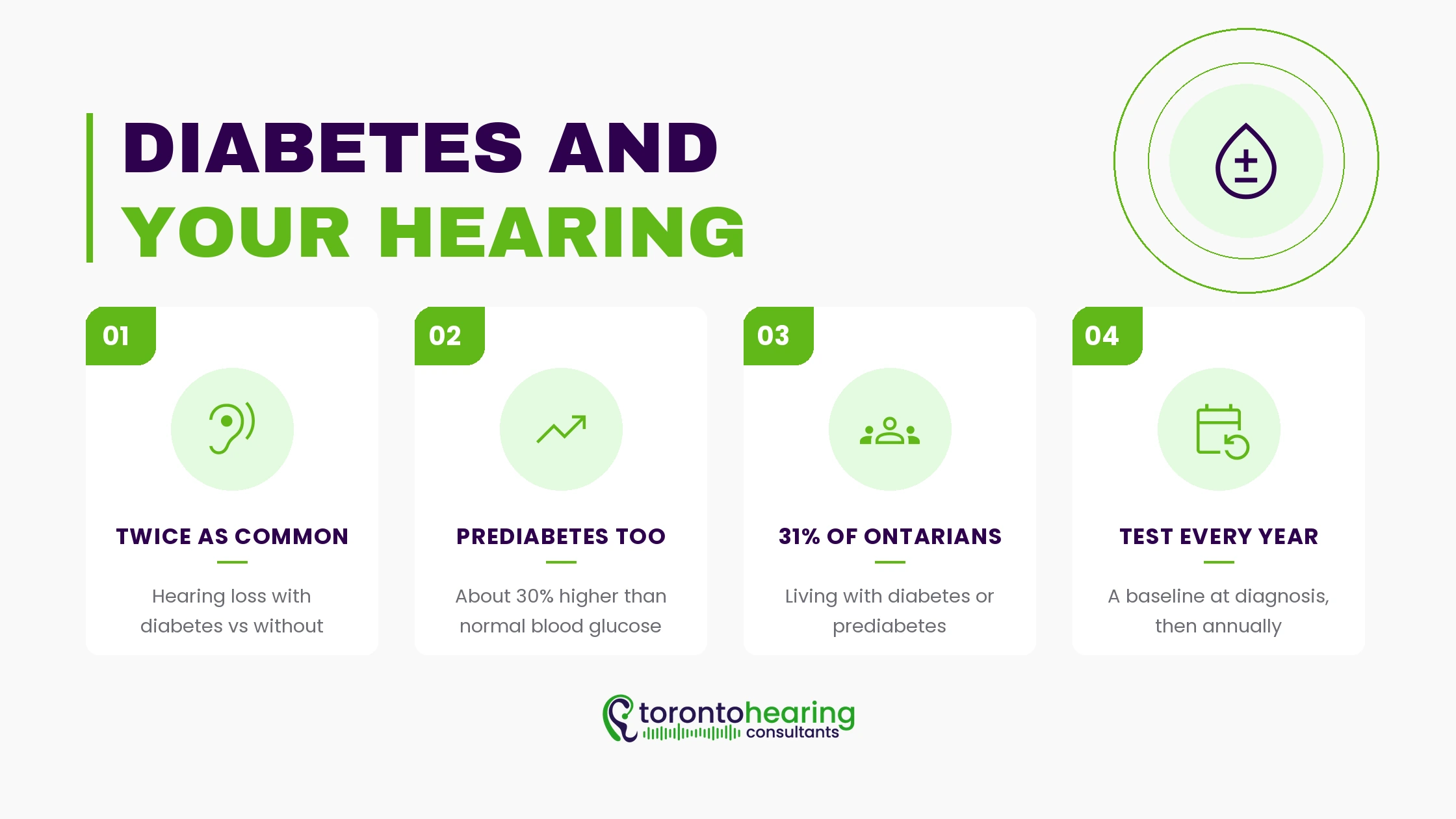
- Hearing loss is roughly twice as common in people with diabetes as in people without it, and the rate is about 30 percent higher in people with prediabetes, according to the American Diabetes Association states.
- Diabetes Canada reported that 31 percent of Ontarians, close to 4.8 million people, live with diabetes or prediabetes once undiagnosed cases are counted.
- The likely mechanism is damage to the small blood vessels of the inner ear, the same process that affects the eyes and the kidneys.
- Diabetes Canada is still reviewing formal screening guidance, while other leading bodies already recommend a hearing screen at diagnosis and yearly afterwards.
- In Ontario that gap has a practical consequence: this is usually a test you have to ask for.
Diabetes-related hearing loss is gradual damage to the inner ear caused by sustained high blood glucose, and it is roughly twice as common in people with diabetes as in people without it. If you are managing diabetes, you already have a list of things to monitor, and hearing is probably not on it.
It arguably should be. The inner ear depends on some of the smallest blood vessels in the body, which places it alongside the eyes and kidneys among the organs high blood glucose quietly damages over time. This guide from Toronto Hearing Consultants explains the connection and why a diagnostic hearing test belongs on the same annual list as your eye examination.
The Connection Between Diabetes and Hearing Loss
Diabetes is a condition of the blood vessels as much as it is a condition of blood sugar, which is why its recognized complications cluster in organs that depend on fine vasculature. Retinopathy affects the eyes, nephropathy affects the kidneys, and neuropathy affects the nerves of the hands and feet.
The cochlea, the spiral organ of the inner ear that converts sound into nerve signals, belongs on that same list. It is richly supplied with tiny blood vessels and lined with hair cells that cannot regenerate once they are lost, which makes it exactly the kind of tissue that sustained high blood glucose tends to damage.
The scale of this in Ontario is considerable. Diabetes Canada reported that in 2024, 1,700,990 Ontarians lived with diagnosed diabetes, rising to 2,403,440 once undiagnosed type 2 cases are included, and that 4,793,340 people, or 31 percent of the province, live with diabetes or prediabetes.
What the Research Actually Shows
The headline finding has been consistent for well over a decade. The American Diabetes Association states that hearing loss is twice as common in people with diabetes as it is in those who do not have diabetes.
The prediabetes figure is arguably the more useful one, because it suggests the damage begins before a formal diagnosis. Among people with prediabetes, the American Diabetes Association states that the rate of hearing loss runs about 30 percent higher than in people with normal blood glucose.
Anyone who has been told their blood sugar is borderline is therefore already in a group with measurably elevated risk. What the research does not show is that diabetes causes sudden or dramatic hearing loss. The pattern is gradual, usually affects both ears, and typically shows up first in the high frequencies, which is precisely the pattern that goes unnoticed longest.
How High Blood Sugar Damages the Inner Ear
The mechanism most often proposed is microvascular damage, meaning injury to the smallest blood vessels in the body. The American Diabetes Association states that high blood glucose levels damage the small blood vessels in the inner ear, in a manner similar to the way diabetes can damage the eyes and the kidneys.
Reduced blood supply to the cochlea means less oxygen and fewer nutrients reaching the hair cells, and those cells are metabolically demanding and unforgiving of shortage. When they are damaged, the result is sensorineural hearing loss, which is permanent because the cells do not grow back.
Nerve damage very likely contributes to the picture as well. Diabetic neuropathy is well recognized in the extremities, and there is no particular reason the auditory nerve would be exempt from a process that affects nerves elsewhere in the body.
Warning Signs Worth Watching For
Hearing loss connected to diabetes develops slowly enough that most people adapt to it without ever registering a change. The signs worth watching for are behavioural rather than dramatic:
- Difficulty following conversation in restaurants, meetings, or any setting with background noise
- Asking people to repeat themselves more often, particularly on the telephone
- Turning the television up to a level that others in the room find loud
- Trouble hearing higher-pitched voices, which often means children and grandchildren
- Ringing or buzzing in the ears, which frequently arrives before any noticeable loss
- A sense that people are mumbling rather than that sound is too quiet
That last one is the most common way patients describe it to us, and it points at high-frequency loss specifically. Consonants like s, f, th, and k carry the core clarity of words. When high blood sugar weakens the ear's ability to process these sounds, speech becomes muddy rather than soft. In everyday life that makes ordinary conversation incredibly draining, because you are reconstructing half of every sentence from context while trying to stay in it.
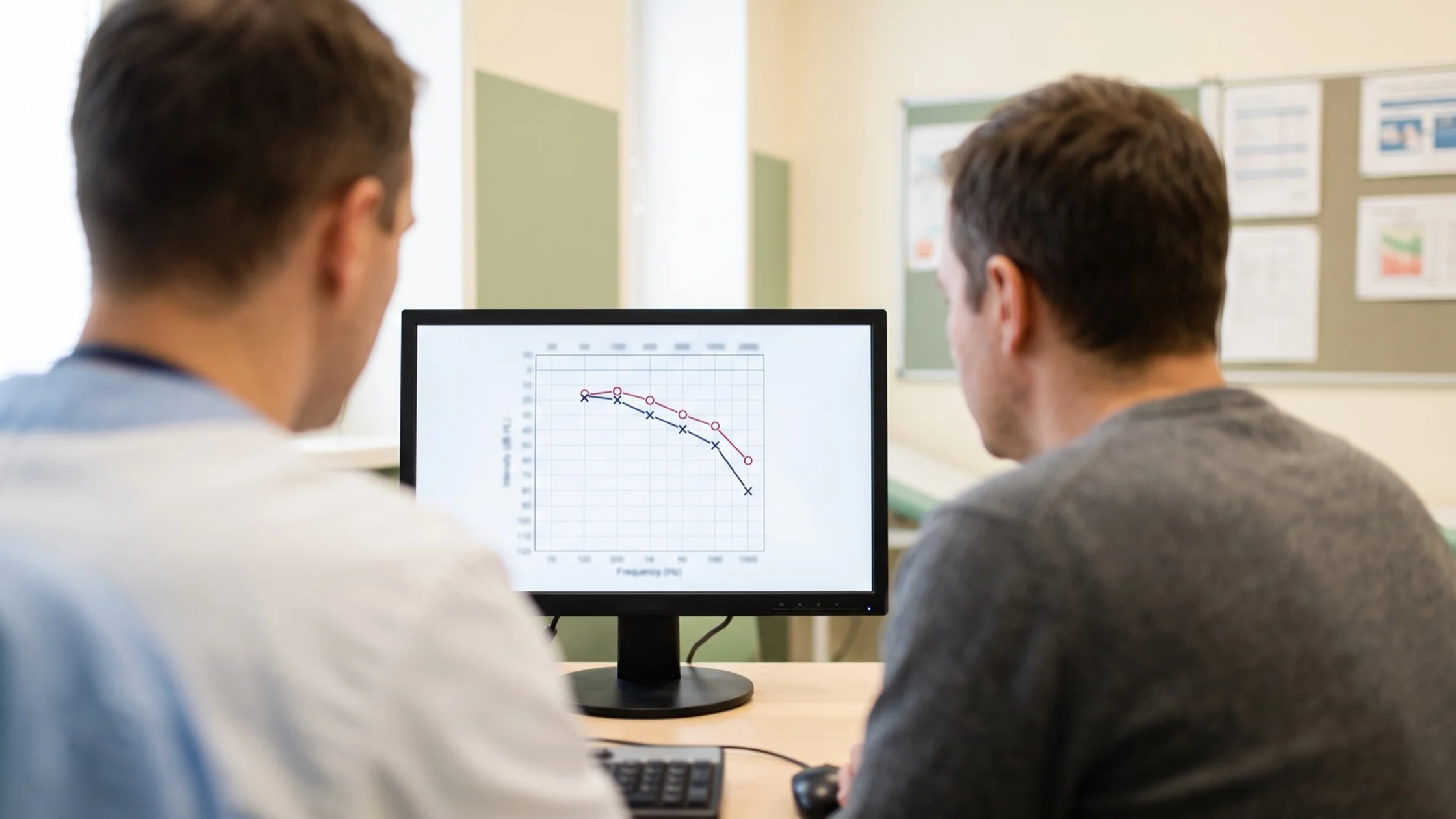
This is also the point where a hearing test stops being abstract. In the booth, patients are often surprised to discover they hear low-pitched tones perfectly well and then struggle with high-pitched whispers. Seeing that split on your own audiogram explains the mumbling far better than any description does, and it tells your audiologist exactly which frequencies need support.
Should People With Diabetes Get an Annual Hearing Test?
While formal screening guidance is still being reviewed by Diabetes Canada, other leading bodies already recommend it. Powell and McCoy, writing in Clinical Diabetes in 2025, summarize the American Diabetes Association Standards of Care as recommending screening people with diabetes for hearing disability at the initial diabetes-related visit and yearly thereafter, with referrals to audiology as appropriate.
That gap has a practical consequence for anyone reading this in Ontario. Your diabetes care team is unlikely to raise hearing on its own, and Powell and McCoy note in Clinical Diabetes that there is little systematic attention to hearing as part of routine clinical care.
In practice, this is a test you will need to request. Our own recommendation is to establish a baseline audiogram when you are diagnosed, then repeat it annually alongside your eye examination, because comparing this year's results to last year's is what turns a hearing test into monitoring rather than a snapshot.
Managing Both Together
Blood glucose control is the part within your influence, and the same management that protects your eyes, kidneys and nerves is the management that protects your hearing. Nobody can promise that good control prevents hearing loss outright, though it is the only lever with a plausible mechanism behind it.
Beyond that, the practical steps are the ordinary ones. Protect your ears from loud noise, since noise damage and vascular damage compound rather than compete.
Mention any hearing change to both your audiologist and your diabetes team, and treat identified loss rather than waiting, because untreated hearing loss carries its own consequences for hearing loss and dementia risk, social withdrawal, and safety.
While sensorineural change to the delicate inner ear structures cannot be reversed, the impact on your daily life is highly treatable. Modern, discreet hearing aid technology acts as a management strategy in its own right, stepping in to pick up the missing high frequencies. Calibrated by an audiologist to your own hearing profile and verified at the eardrum, those devices give back the consonants that carry the meaning, which is what makes conversation stop feeling like work.
Toronto Hearing Consultants sees the hearing loss and diabetes connection regularly at both our Bloor West Village and Annex clinics, and we build annual monitoring into the care plan for patients managing chronic conditions. Diabetes sits alongside several other medical conditions that affect hearing, and a full diagnostic assessment takes about an hour and gives you the baseline that every future comparison depends on.
Add Hearing to the List You Already Track
If you have diabetes or prediabetes and have never had your hearing tested, a baseline audiogram is the single most useful thing you can do about it. Everything else in this article depends on having one to compare against.
Serving families across Bloor West Village, the Annex, and the broader Greater Toronto Area, our independent clinics offer structured annual tracking for patients managing chronic health conditions. The assessment is $50 for patients over 50, $90 for patients under 50, and $110 for children, and private insurance plans commonly reimburse it.
Audiology diagnostics are not covered by OHIP, so no referral is needed, and nothing has to be arranged through your family doctor first. If you are not sure where to start, contact our team and we will walk you through it.
Frequently Asked Questions
Does Diabetes Cause Hearing Loss?
Diabetes is strongly associated with hearing loss, and the American Diabetes Association states it is about twice as common in people with diabetes as in people without. The most widely proposed explanation is damage to the small blood vessels supplying the inner ear, the same microvascular process that affects the eyes and the kidneys. Association is not proof of cause in any individual patient, but the pattern is consistent enough that hearing belongs among the complications worth monitoring alongside vision and kidney function.
Can Hearing Loss From Diabetes Be Reversed?
No, not once the damage is done. Sensorineural hearing loss from damaged inner ear hair cells is permanent, because those cells do not regenerate once they are lost. That said, permanent is not the same as untreatable, and this kind of loss responds well to properly fitted hearing aids with real-ear verification. Good blood glucose control is the sensible way to protect the hearing you still have, since the same management that protects your eyes, kidneys and nerves is what protects the cochlea.
How Often Should Someone With Diabetes Have a Hearing Test?
Diabetes Canada is still reviewing formal guidance, while the American Diabetes Association already recommends screening at the initial diabetes-related visit and yearly thereafter, with referral to audiology as appropriate, as summarised in Clinical Diabetes. That gap has a practical consequence in Ontario: your diabetes care team is unlikely to raise hearing on its own, so this is a test you will need to request. Our advice is a baseline at diagnosis, then annually alongside your eye examination.
Does Prediabetes Affect Hearing?
Yes, and this surprises most people who ask. The American Diabetes Association states that the rate of hearing loss among people with prediabetes runs about 30 percent higher than among people with normal blood glucose, which suggests damage begins before a formal diagnosis is ever made. Anyone told their blood sugar is borderline is therefore already in a group with measurably elevated risk. That makes prediabetes a sensible point to establish a baseline audiogram rather than waiting for a diagnosis to arrive.
What Kind of Hearing Loss Does Diabetes Cause?
It typically produces gradual sensorineural hearing loss affecting both ears roughly equally, showing up first in the high frequencies. That pattern matters because consonants such as s, f, th and k carry most of the clarity in speech and sit in exactly those frequencies. Losing them makes speech sound unclear rather than quiet, which is why so many patients describe everyone around them as mumbling rather than reporting that they cannot hear. Sudden or one-sided loss is a different problem needing prompt assessment.