Ear wax is one of those things most people rarely think about until it becomes a problem.
One day your ears feel perfectly normal. The next, sounds seem muffled, conversations become harder to follow, and you may find yourself wondering whether something is wrong with your hearing.
The surprising reality is that ear wax is not the enemy. In fact, it plays an important role in protecting your ears and supporting long term hearing health. Problems usually arise when people try to remove it themselves or when natural ear wax buildup becomes excessive and creates a blockage.
Understanding the difference between healthy ear wax and problematic ear wax buildup can help you avoid unnecessary complications and know when professional care may be the safest option.
At a Glance
- Why ear wax exists and why it is beneficial
- Symptoms of ear wax blockage
- Common ear cleaning mistakes to avoid
- Safe ear wax removal options
- When professional treatment may be necessary
- What to expect during an ear wax removal appointment
Your Ears Have Their Own Cleaning System
Many people assume ear wax is simply dirt that needs to be removed regularly. That is not actually how the ear works.
Ear wax, also known as cerumen, is produced naturally by glands inside the ear canal. It helps trap dust, debris, bacteria, and other particles before they can travel deeper into the ear.
It also helps keep the ear canal moisturised and protected from irritation.
In most cases, the ear is remarkably effective at cleaning itself. Normal jaw movements such as talking and chewing gradually move older wax toward the outer ear where it naturally dries and falls away.
This means routine cleaning ear wax from deep inside the ear canal is usually unnecessary.
In many cases, leaving ear wax alone is the healthiest choice. Health resources from HealthLink BC also note that ear wax plays an important protective role and often does not require routine removal when the ear is functioning normally.
When Ear Wax Stops Being Helpful
While ear wax is beneficial, there are situations where buildup becomes excessive. Some people naturally produce more ear wax than others. Hearing aid users, earbud users, and people with narrower ear canals may also be more likely to experience blockages.
When ear wax accumulates faster than the ear can remove it, it may begin to create symptoms that affect comfort and hearing.
Understanding how ear wax affects hearing health can help people recognise when a simple buildup may be contributing to hearing difficulties rather than a more serious underlying condition. This is where understanding earwax and blockages becomes particularly important.
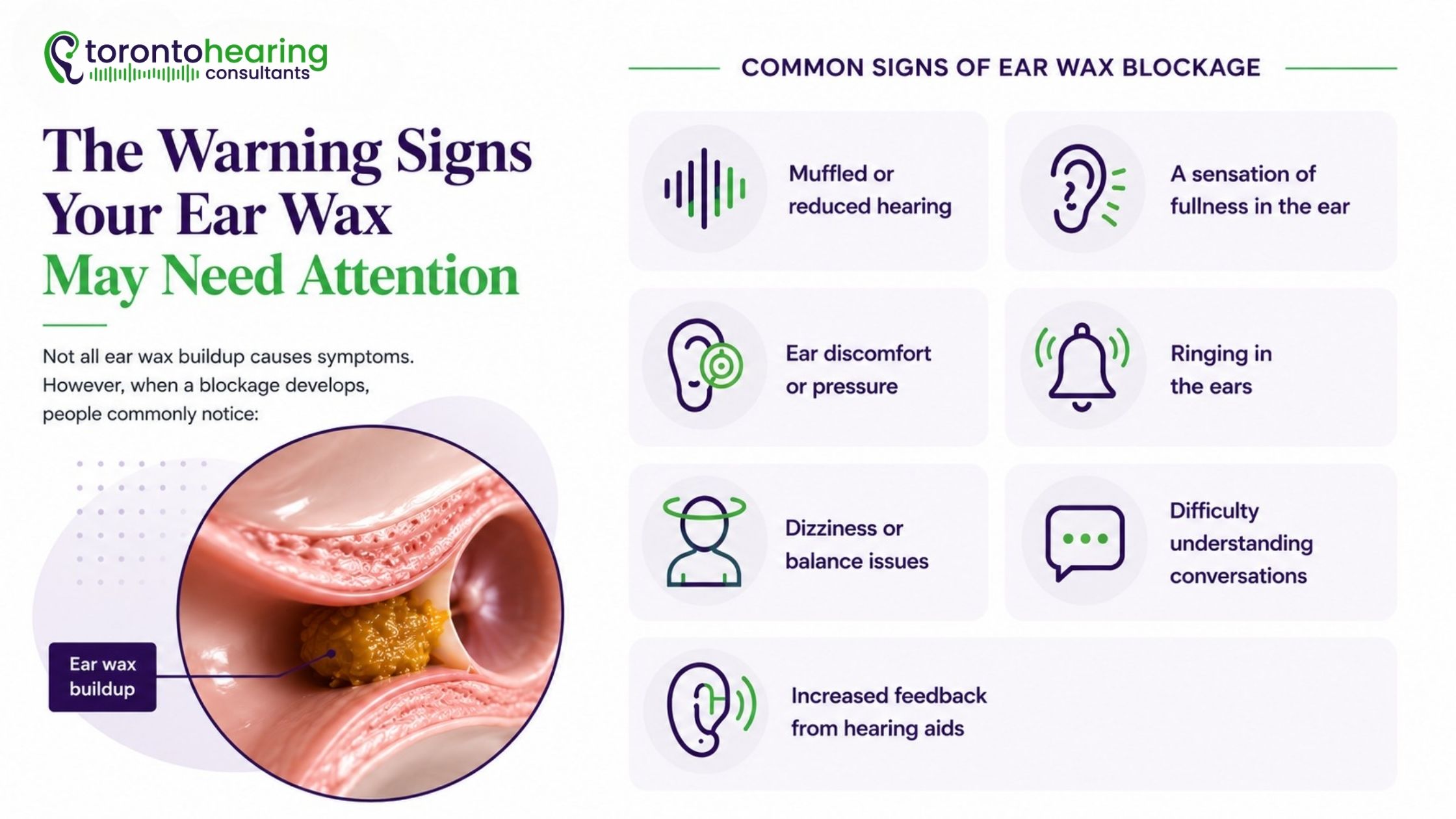
The Warning Signs Your Ear Wax May Need Attention
Not all ear wax buildup causes symptoms.
However, when a blockage develops, people commonly notice:
- Muffled or reduced hearing
- A sensation of fullness in the ear
- Ear discomfort or pressure
- Ringing in the ears
- Dizziness or balance issues
- Difficulty understanding conversations
- Increased feedback from hearing aids
One of the most common complaints associated with significant ear wax buildup is temporary hearing difficulty.
In fact, hearing loss from ear wax can sometimes develop gradually enough that people do not immediately realise wax is the cause.
If symptoms appear suddenly or worsen over time, professional evaluation is often the safest next step.
According to MyHealth Alberta, symptoms such as muffled hearing, ear fullness, and discomfort can sometimes indicate an ear wax blockage that may require treatment.
The Ear Cleaning Habits That Can Make Things Worse
Many people attempt to remove ear wax at home using cotton swabs.
Unfortunately, this often creates the very problem they are trying to solve. Cotton swabs frequently push wax deeper into the ear canal rather than removing it. Over time, this can create compacted ear wax buildup that becomes increasingly difficult to remove.
Other methods to avoid in earwax removal include:
- Hair pins or other objects inserted into the ear
- Ear candling
- Sharp instruments
- Excessive flushing without professional guidance
These approaches can increase the risk of irritation, infection, ear canal injury, or damage to the eardrum. When it comes to safe ear wax removal, less is often more.
When Professional Ear Wax Removal Makes Sense
There are times when professional care is the most effective option.
You may want to consider walk-in clinic ear wax removal or hearing clinic services if:
- Symptoms persist despite home care
- Hearing becomes noticeably reduced
- You wear hearing aids regularly
- Ear wax repeatedly causes problems
- You have a history of ear conditions
- You are unsure whether symptoms are caused by wax
Seeking professional ear wax removal can help ensure the blockage is removed safely while reducing the risk of injury associated with home methods.
For many patients, prompt treatment can provide immediate relief from pressure, discomfort, and temporary hearing difficulties.
What to Expect During Ear Wax Removal
Many people feel nervous before their first appointment because they are unsure what the process involves.
The good news is that professional ear wax removal is typically straightforward and comfortable. The first step usually involves examining the ear canal to determine the extent of the blockage and identify the most appropriate earwax removal methods.
Depending on the situation, treatment may involve specialised instruments, irrigation techniques, or other clinically appropriate procedures.
The goal is to safely remove excess wax while protecting the delicate structures inside the ear. After removal, many patients report that sounds seem noticeably clearer and more natural.
Clinical guidance published through the National Center for Biotechnology Information highlights the importance of selecting appropriate earwax removal methods based on the individual patient and the severity of the blockage.
Sometimes It Is Not Ear Wax at All
One reason professional assessment matters is that hearing changes are not always caused by ear wax buildup.
Symptoms such as muffled hearing, ringing, or difficulty following conversations may also be associated with age related hearing changes, noise exposure, or certain medical conditions linked to hearing loss.
If symptoms continue after wax removal, a comprehensive hearing test can help determine whether another hearing issue may be contributing to the problem.
Identifying the underlying cause early often leads to better outcomes and more effective treatment options.

Looking Beyond Wax and Protecting Long Term Hearing Health
Ear wax removal is only one part of maintaining healthy hearing. Regular monitoring can help identify changes before they begin to significantly affect communication, relationships, or quality of life.
This is one reason why regular hearing tests matter, especially for older adults, individuals exposed to workplace noise, and people who have noticed gradual hearing changes.
For those experiencing hearing difficulties beyond ear wax buildup, personalised hearing solutions and hearing aids may help improve clarity, comfort, and everyday communication.
Taking a proactive approach to hearing health often makes it easier to address concerns before they become larger challenges.
The Government of Canada also emphasizes the importance of protecting hearing over time, particularly for individuals regularly exposed to higher noise levels at work or during recreational activities.
Key Takeaways
- Ear wax serves an important protective function and is usually beneficial.
- Most ears naturally clean themselves without intervention.
- Ear wax buildup can sometimes lead to temporary hearing difficulties.
- Cotton swabs and other home removal methods may worsen blockages.
- Professional assessment can help determine whether symptoms are caused by wax or another hearing issue.
- Safe ear wax removal reduces the risk of injury and complications.
- Regular hearing care supports long term hearing health and overall wellbeing.
Frequently Asked Questions
Should I remove ear wax regularly?
In most cases, no. The ear has a natural self cleaning process that gradually moves excess wax out of the ear canal on its own. Unless wax is causing symptoms or has been identified as a problem, regular removal is usually unnecessary.
Can ear wax cause hearing loss?
Yes. Significant ear wax buildup can block sound from reaching the eardrum properly, resulting in temporary hearing loss from ear wax. Once the blockage is safely removed, hearing often returns to normal if no other hearing concerns are present.
Are cotton swabs safe for ear cleaning?
Cotton swabs are generally not recommended because they often push wax deeper into the ear canal instead of removing it. This can increase the risk of impacted ear wax, irritation, and even injury to the ear canal or eardrum.
How do I know if I need professional ear wax removal?
Common signs include muffled hearing, a feeling of fullness in the ear, ringing, discomfort, or recurring blockages. If symptoms persist or you are unsure whether ear wax is the cause, a professional assessment can help determine the best next step.
Is ear wax removal painful?
Professional ear wax removal is typically comfortable and performed using techniques designed to protect the ear. Most people experience little to no discomfort and often notice immediate improvement in hearing and ear comfort after treatment.
Protecting Your Hearing Starts With Knowing What Is Normal
Ear wax is a natural and important part of a healthy ear. In many cases, the best thing you can do is leave it alone and allow your ears to manage it naturally.
However, when symptoms develop or ear wax buildup begins affecting comfort or hearing, professional care can help identify the cause and provide safe treatment.
Whether you are experiencing symptoms, have concerns about recurring buildup, or simply want guidance about your hearing health, Toronto Hearing Consultants can help. If you are ready to schedule an appointment, our team provides personalised hearing care, professional ear wax removal services, and comprehensive assessments at two convenient locations in Toronto.